

What is Foundation Drilling?
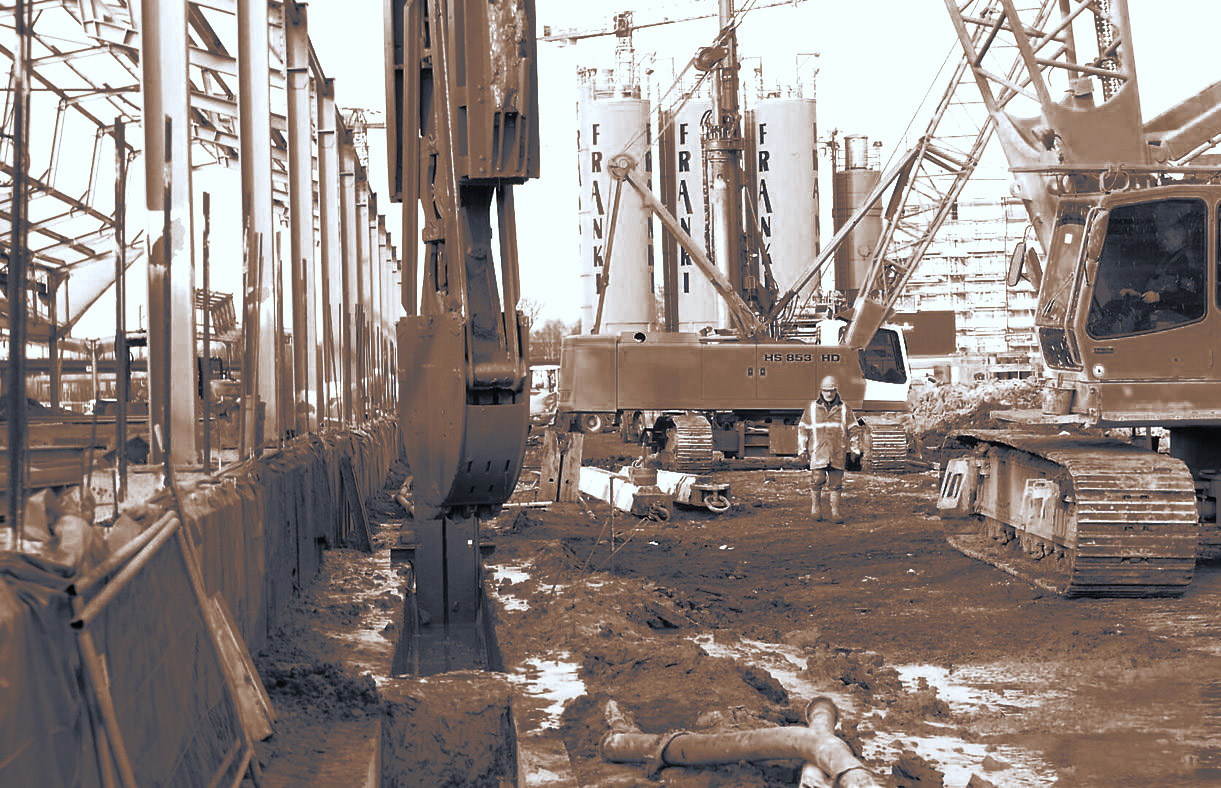
Foundation drilling encompasses the techniques used to create deep structural elements that transfer building, bridge, and infrastructure loads to competent bearing strata far below the surface. Several methods are in common use, each presenting unique fluid challenges:
- Drilled Shafts (Caissons / Bored Piles) — Large-diameter holes (typically 2–12 ft) drilled to depth, with reinforcing steel placed and then filled with concrete. The most common deep foundation method for bridges and high-rise structures.
- Continuous Flight Auger (CFA) Piles — A hollow-stem auger is advanced to depth and then concrete is pumped through the auger stem as it is withdrawn, simultaneously filling the hole and forming the pile.
- Diaphragm Walls (Slurry Walls) — Deep structural walls constructed by excavating a trench under bentonite slurry, placing a reinforcing cage, and tremie-concreting in sections. Used for deep basements, cut-and-cover tunnels, and water-retaining structures.
- Secant and Tangent Pile Walls — A series of overlapping or adjacent bored piles that form a continuous wall for earth and water retention.
Why Drilling Fluids Are Critical to Foundation Work
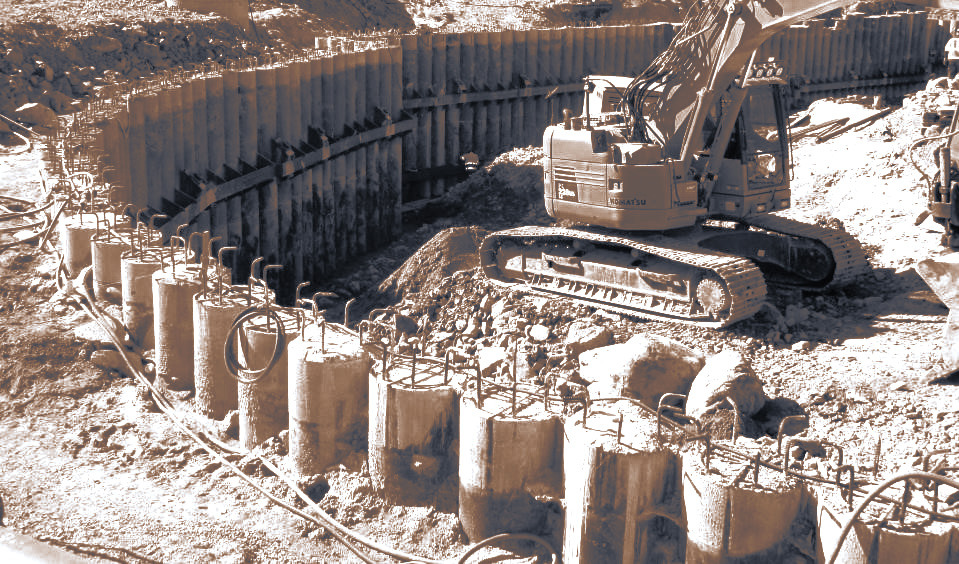
Below the water table, an open borehole in granular or weak soil will collapse within seconds without fluid support. Drilling fluid is the only practical way to maintain a stable borehole from the time the bit enters the ground until concrete is placed. The fluid system must accomplish several things:
- Hydrostatic support — The fluid column maintains pressure against the borehole walls equal to or greater than groundwater and earth pressure, preventing collapse in sands, gravels, and silts.
- Filter cake formation — Bentonite and polymer fluids deposit a thin, low-permeability filter cake on the borehole wall that seals the formation and maintains the fluid head. Without it, fluid is lost into the ground and borehole pressure drops.
- Cuttings suspension — The fluid must have sufficient gel strength to keep drill cuttings suspended during periods when circulation is stopped (e.g., during steel placement), preventing sediment accumulation at the shaft bottom that would compromise load-bearing capacity.
- Formation protection — Polymer-based fluids inhibit the swelling of reactive clays and shales, which can close the borehole or contaminate the concrete interface.
- Concrete compatibility — At the time of concrete placement, the fluid must be clean enough (low sand content, acceptable viscosity) not to contaminate the concrete mix or leave inclusions in the finished shaft.
How NorthStar Supports Foundation Projects

NorthStar provides both bentonite and polymer fluid systems for foundation drilling, and our technical team can help contractors select the right approach for the soil conditions and specification requirements of their project. Where owner specifications require polymer slurry, we supply biodegradable PHPA and polyacrylamide-based systems that perform across a wide range of soil types without the disposal concerns associated with bentonite.
We supply products for routine day-to-day shaft drilling as well as large-scale diaphragm wall and secant pile projects where slurry must be maintained and recycled over weeks of continuous operation. Our team can advise on slurry recycling, desanding, and maintenance to minimize waste and cost.
From small commercial piles to major bridge foundations and deep basement excavations, NorthStar has the product range and the experience to keep boreholes stable from the first drill stroke to final concrete placement.
Key Products
Commonly used additives for foundation drilling.
Fluid Programs for Foundation

NorthStar's Foundation EDFPs estimate slurry volumes, product requirements, and mix specifications for drilled shaft and slurry wall projects before mobilization. Pre-project fluid planning ensures materials are on site when needed, slurry properties are defined before drilling begins, and the crew has a reference guide for mix ratios and maintenance procedures throughout the project.