

What is Tunneling & Pipe Jacking?
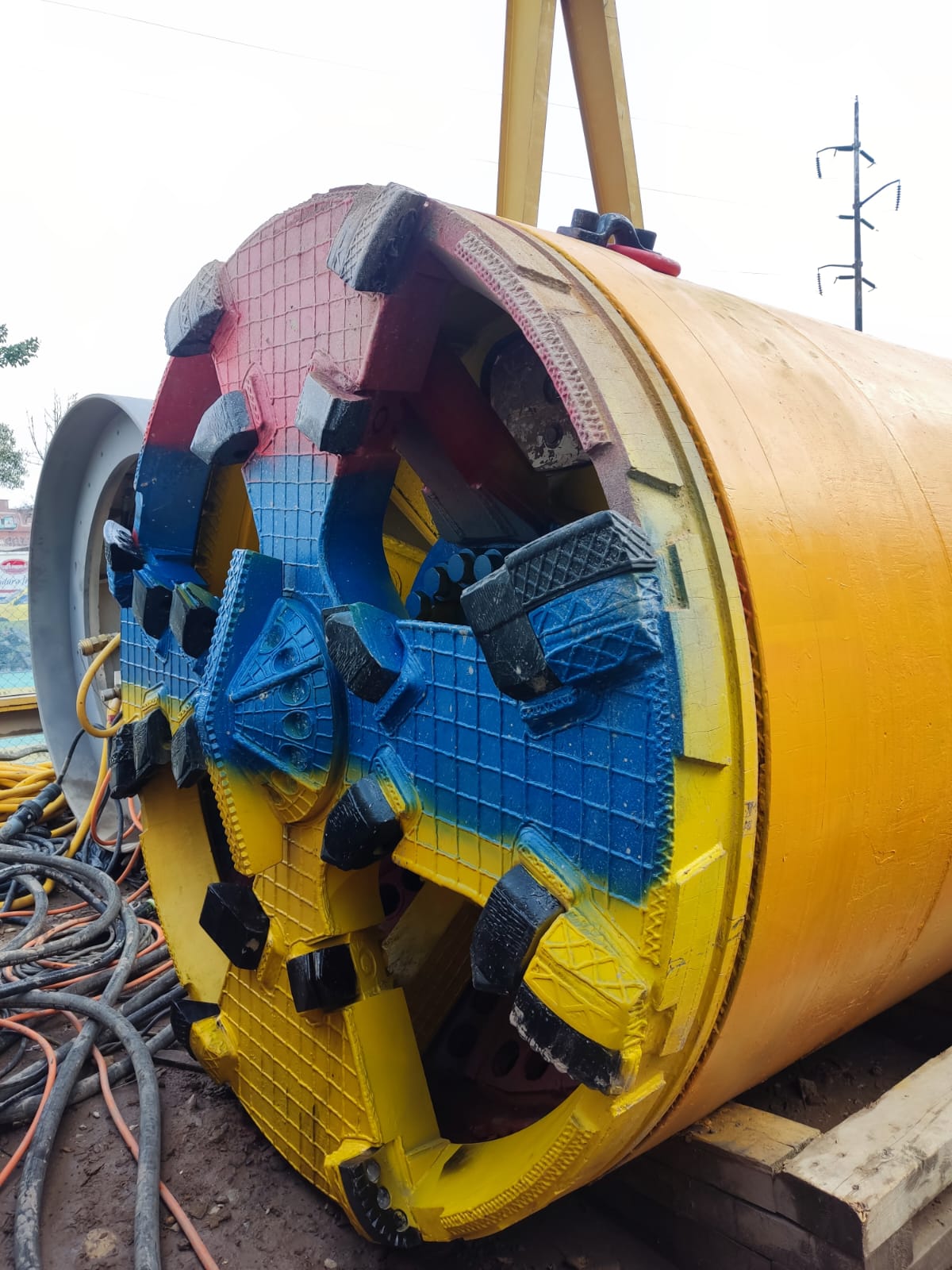
Tunneling encompasses several trenchless methods used to install large-diameter pipe, construct utility corridors, and bore through rock or soft ground without surface disruption. NorthStar serves four primary tunneling methods:
- Slurry TBM — Full-face tunnel boring machines that maintain face pressure using a pressurized bentonite or polymer slurry. Excavated material mixes with the slurry and is pumped back to the surface separation plant.
- Microtunneling / MTBM — Remotely operated, laser-guided machines installed from a launch shaft. The machine excavates at the face while pipe is pushed (jacked) from above, making this method ideal for gravity sewer and storm drain installations.
- Pipe Jacking — Hydraulic jacks push a string of pre-cast pipe segments behind a cutting shield or manned TBM, with lubrication fluid injected into the pipe-soil annulus to reduce friction.
- Auger Boring — A rotating auger inside a steel casing conveys spoil back through the casing while hydraulic jacks advance the bore, typically used for short road and railway crossings.
Why Drilling Fluids Are Critical to Tunneling

In any soft-ground tunneling operation, fluid management is the difference between a smooth drive and a stalled — or lost — machine. Drilling fluids perform critical roles that no mechanical system can replace:
- Face support — In slurry TBM operations, pressurized slurry balances the groundwater and earth pressure at the tunnel face, preventing collapse and surface subsidence above the alignment.
- Annular lubrication — In pipe jacking, a thixotropic bentonite or polymer slurry is injected through ports in the pipe wall into the annulus between the pipe OD and the surrounding soil. This dramatically reduces skin friction, lowering jacking forces and allowing far longer drive lengths.
- Spoil conditioning — Slurry conditions excavated material for efficient transport via pipeline (slurry TBM) or conveyance (MTBM), preventing blockages and keeping the cutter head clean.
- Clay balling prevention — Polymer additives prevent sticky clays from adhering to the cutter head and auger flights, which can stall the machine or cause significant downtime.
- Groundwater control — Proper slurry density and yield point maintain the fluid head needed to keep the tunnel dry and stable, even in high groundwater conditions.
How NorthStar Supports Your Tunneling Project

NorthStar's technical team understands that every tunneling project presents a unique combination of soil type, pipe diameter, drive length, and groundwater conditions. We design fluid programs around those specific variables — not a generic formula — from the early planning phase through final breakthrough.
For pipe jacking projects, we calculate annular lubrication volumes based on pipe OD, drive length, and anticipated soil friction to ensure contractors can bid jacking forces accurately. For slurry TBMs, we help specify slurry density, yield point, and separation plant chemical treatment to keep the circuit running efficiently.
Our products have been used on micro-tunnels under a few meters and large-diameter TBM drives over a kilometer in length, across sands, gravels, silts, clays, and mixed-face conditions. NorthStar also provides on-site technical support and can supply fluids in bulk to match tight project schedules.
Key Products
Commonly used additives for tunneling fluid systems.
Fluid Programs for Tunneling

NorthStar's Tunnel EDFPs provide pre-project slurry specifications, annular lubrication volume estimates, and product requirements accounting for soil type, pipe size, drive length, and expected jacking forces. Delivered before mobilization, our programs help contractors price projects accurately and arrive on site prepared for the conditions they will encounter.